Groupe E Vario smart home integration, free and open source
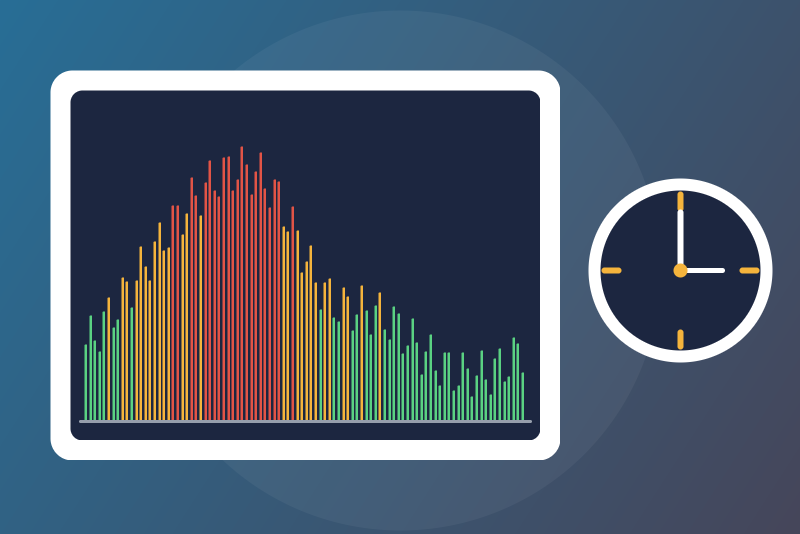
Unofficial: Groupe E Vario dynamic tariff (Fribourg), per quarter hour, as energy contracts.
Published by LM1LC3N7
- Devices
- Version 0.1.1
- Requires Gladys >=5.3.0
- ★ 0
Unofficial integration, not affiliated with Groupe E. Never tested with a real Gladys energy contract nor a real meter yet; the Groupe E API itself was read for real on 2026-11-11.
Vario is the optional dynamic tariff of Groupe E (canton of Fribourg and around): a different price for every quarter hour, published the day before at about 15:00, and a bill computed on the meter's quarter-hour readings.
This integration adds two energy contracts and two price calendars to Gladys:
- Groupe E Vario (integrated price): the Vario integrated price (energy and grid) of each quarter hour;
- Groupe E Vario (grid): the Vario grid price of each quarter hour, plus the energy price you type (when your energy is billed apart);
- the calendars
groupe-e-vario(integrated price) andgroupe-e-vario-grid(grid price), in CHF/kWh per quarter hour, that other contract templates can read.
Source
The public tariff API of Groupe E, version 2:
https://api.tariffs.groupe-e.ch/v2/tariffs (no account, no key). Groupe E
retired the version 1 (it answers "410 Gone"); if the version 2 goes too, the
status says so ("the API v2 is gone") and the integration needs an update.
Groupe E publishes no terms of use for this API (none found on 2026-11-11): the
integration spares it (see below) and names itself with its own User-Agent.
Your bill always prevails.
Getting started
- Install the integration (Gladys 5.3.0 or later, nothing to configure).
- In Energy → Contracts, create a "Groupe E Vario (integrated price)" or "Groupe E Vario (grid)" contract on your main meter.
- Type, if needed:
- Energy price per kWh (grid template only), before VAT, 0 to 2 CHF;
- Supplement per kWh: what is billed per kWh and not in the Vario price (federal grid surcharge, municipal charges…), before VAT, 0 to 2 CHF;
- VAT, 0 to 25 %, added to the whole price per kWh. 0 keeps the prices as Groupe E publishes them: check on your bill whether they already include VAT (8.1 % in 2026);
- Fixed amount per month (subscription, metering), VAT included, 0 to 1000 CHF, computed by Gladys.
An input out of these bounds is not priced (the status counts those contracts), nor a half hour that would cost more than 10 CHF per kWh, the Gladys limit (the request fails with that reason).
How each half hour is priced
Gladys sends half hours; Vario prices change every quarter hour. A half hour is priced as its two quarter hours, each with half of the energy (the Gladys convention for quarter-hour calendars):
cost = (½ kWh × price of the 1st quarter + ½ kWh × price of the 2nd quarter + kWh × (energy typed + supplement)) × (1 + VAT).
- A missing price is never guessed nor counted 0: when a quarter hour is not known yet, the Gladys request fails, the half hour stays without a cost, and Gladys computes it again later (about every 30 minutes). The missing day is asked from Groupe E in the background. Gladys catches up a delegated contract from its oldest half hour without a cost (31 days at most per run): a quarter hour Groupe E never publishes (or that does not read) holds the catch-up of that whole window back until it leaves the 31 days. A limit of the Gladys engine, which cannot leave one interval without a cost and price the others.
- The price never depends on the network at pricing time: only the prices already received are used; a retry of Gladys gets the same answer.
- Negative price: Gladys refuses a negative cost for a delegated contract. A half hour whose total would be negative is counted 0 and labelled "negative price, counted 0". The current price is shown as it is.
- The current price (dashboard widget, "current price" scene condition) is the one of the current quarter hour, with the next one when published; unknown, it is empty, never 0.
- Clock changes: the spring day has 92 quarter hours, the autumn one 100; the hour from 02:00 to 03:00 seen twice in October has its own prices.
When Groupe E is asked
- At the first start: the last 35 days, in windows of 7 days at most, one request at a time.
- Then: the next day, from 15:00 (Swiss time), then every 30 minutes until it is complete; a complete day is never asked again.
- A past day incomplete or empty (before the start of the API history, January 2026): asked again once a day at most.
- A day a pricing request of Gladys did not find: asked a minute after the last request at the earliest (later after a failure).
- After a failure: tried again after 5, 15, 30 minutes, 1 h, then every
3 hours; a "429" follows its
Retry-After(between 1 minute and 6 hours, 10 minutes without the header), kept in/data; a retired API (404/410) is asked again every 6 hours. A failure stops the other windows until the next attempt. - The time of each attempt is written to
/databefore the request: a restart or a reconnection does not ask sooner. - Bounded answers: 30 seconds, 2 MB, 1000 quarter hours; a redirect is never followed.
What an answer may not carry
A quarter hour is kept only when its start and end are exact ISO instants
15 minutes apart, on the quarter, and both of its prices numbers in CHF_kWh
between −5 and 5 CHF. Another unit is never converted, a text or an empty value
is never a 0, two different prices for one quarter hour: neither is believed.
An answer never makes a price already received forgotten. A complete day is
not asked again, so a later correction by Groupe E is not seen; a quarter hour
received again with another price (a day asked again while incomplete) replaces
the old one and is published again to the calendar, but the costs Gladys
already computed are not computed again (Gladys does not offer it to a
delegated contract).
Status
The status of the integration tells: up to which day the prices are known, the
time of the last Groupe E publication, the last check, the error of the last
attempt and the time of the next one, a today or tomorrow not complete, a
calendar refused, the contracts with an input out of bounds, a /data that
cannot be read or written.
Calendars
The keys groupe-e-vario and groupe-e-vario-grid name the tariff Groupe E
publishes. If another integration declared them first, Gladys refuses this one's
writes (the status says so); this integration's contracts keep working, they do
not read the calendars. A calendar not fed (Gladys unreachable) is tried again
at the next check or reconnection, without a new request to Groupe E.
Data kept
/data/groupe-e-vario-state.json: the prices per day (400 days at most), the
time of the attempts, the pause if any, what each calendar received. No secret,
no personal data. A file that does not read is read again every 10 seconds
without asking Groupe E anything, and never overwritten with an empty state.
Limits
- Gladys cannot express a negative cost for a delegated contract: counted 0.
- A correction by Groupe E of a day already complete is not seen, and Gladys does not compute again the past costs of a delegated contract.
- The "integrated" price is taken as Groupe E publishes it: what it includes (VAT, levies) was not checked against a bill.
Configuration settings
These are the settings Groupe E Vario asks for in its configuration screen in Gladys.
| Setting | Type | Required | Description |
|---|---|---|---|
| Groupe E Vario | section | No | Unofficial, not affiliated with Groupe E. Vario is the optional dynamic tariff of Groupe E: a price for every quarter hour, published the day before at about 15:00. This integration reads the public Groupe E tariff API (no account, no key) and adds two energy contracts in Energy → Contracts: "Groupe E Vario" (the integrated price, energy and grid) and "Groupe E Vario (grid)" (the grid price plus the energy price you type). Gladys prices every half hour with the published quarter hours; a quarter hour not published stays without a cost until it is, never a guessed price. The prices also feed the calendars groupe-e-vario and groupe-e-vario-grid. Nothing to configure here. Source: Groupe E; your bill always prevails. |
How to install Groupe E Vario in Gladys
- In Gladys, open Integrations: Groupe E Vario appears in the catalog, next to the native integrations, with a community badge.
- Click Install. Gladys pulls the Docker image (
ghcr.io/lm1lc3n7/gladys-groupe-e-vario:0.1.1), starts it in a sandbox isolated from the core, and generates the integration's interface (devices, discovery and configuration). - Open the Configuration screen of the integration, fill in the settings, and save.
- You can also install it directly from its repository URL: https://github.com/LM1LC3N7/gladys-groupe-e-vario.
Groupe E Vario requires Gladys >=5.3.0. The catalog inside Gladys refreshes every hour, so a new version becomes available at most one hour after its release.
Not running Gladys yet? It is free and open source: follow the installation guide to get started.
About external integrations
Groupe E Vario is an external integration: a community integration packaged as a Docker container and published on GitHub, that Gladys installs in one click and runs in a sandbox isolated from its core. It is published and maintained by LM1LC3N7, not by the Gladys core team.
- Browse all integrations, native and community
- Build and publish your own external integration
- Source code on GitHub — source of this documentation