ISS Overhead Smart-Home-Integration, kostenlos und Open Source
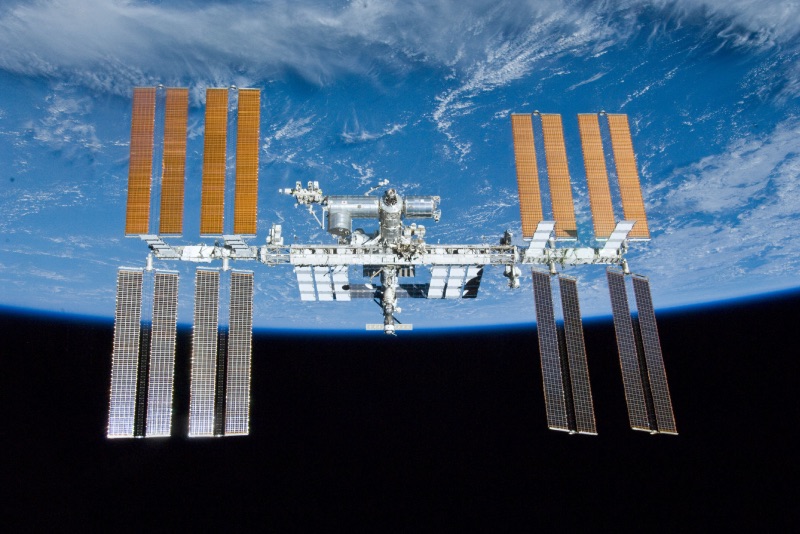
Predicts visible ISS passes over your house and can trigger a scene when one starts.
Veröffentlicht von cicoub13
- Geräte
- Version 0.3.1
- Erfordert Gladys >=5.1.0
- ★ 0
Die Dokumentation dieser Integration wird von ihrem Autor geschrieben und ist bisher nur auf Englisch verfügbar.
Requires Gladys 5.1 or later. The dashboard widget and the scene trigger/action this integration is made of ship with Gladys 5.1; on an earlier version the integration cannot be installed.
Predicts the next visible passes of the International Space Station over your house, shows them on a dashboard widget, and can trigger a scene right before one starts — perfect for "go look outside" automations.
What it shows
The ISS Passes widget displays:
- a photo of the station, and how long until the next visible pass, with its maximum elevation;
- the next few passes, with their time, duration and the direction the ISS rises from (local time, in the language of your Gladys);
- whether the ISS is visible tonight, and whether the orbital data used to compute passes is fresh.
A pass is only shown as visible when the ISS is above the horizon, your house is in the dark, and the ISS itself is still lit by the sun — the same conditions that make it a bright, fast-moving "star" in the evening or early-morning sky.
Automations
- Trigger: "ISS pass starting" — fires shortly before a visible pass begins. Optionally filter by the direction it rises from. Use it to turn on a "look up!" notification, or to switch off outdoor lights that would spoil the view.
- Action: "Get next ISS pass" — fetches the next predicted pass on demand, for scenes that want to announce it (e.g. a voice message) rather than react to it.
Both expose the pass as variables. For a message, prefer the ready-to-read
ones, written in the Scene language of the configuration and in your
local time: start_date (e.g. "Monday, September 28"), start_hour
(e.g. "07:49 PM") and direction_name (e.g. "west"). direction (compass
code, e.g. "W") stays available for scenes that compare it. For example "The ISS passes on start_date at start_hour,
rising in the direction_name." gives "The ISS passes on Monday, September 28
at 07:49 PM, rising in the west.", for a notification as well as a voice
message.
Configuration
| Key | Default | Description |
|---|---|---|
| Minimum elevation | 10° | Passes that never rise above this angle are ignored. |
| Prediction window | 5 days | How far ahead passes are predicted (3, 5 or 7 days). |
| Scene lead time | 5 minutes | How long before a pass starts the "ISS pass starting" trigger fires (≤60). |
| Scene language | French | Language of the date, time and direction handed to scenes. |
The integration needs your house's location, granted automatically when you install it (no address to type in).
No API key needed
Orbital data (TLE) is fetched from Celestrak, a free public source — nothing to sign up for.
Konfigurationseinstellungen
Diese Einstellungen fragt ISS Overhead in seinem Konfigurationsbildschirm in Gladys ab.
| Einstellung | Typ | Pflichtfeld | Beschreibung |
|---|---|---|---|
| Minimum elevation (°) | number | Nein | Passes rising below this elevation angle are ignored. |
| Prediction window | select | Nein | How many days ahead to predict passes for. |
| Scene lead time (minutes) | number | Nein | How long before a pass starts the "ISS pass starting" trigger fires. |
| Scene language | select | Nein | Language of the date, time and direction handed to your scenes (notifications, voice messages). |
So installierst du ISS Overhead in Gladys
- Öffne in Gladys Integrationen: ISS Overhead erscheint im Katalog neben den nativen Integrationen, mit einem Community-Badge.
- Klicke auf Installieren. Gladys lädt das Docker-Image (
ghcr.io/cicoub13/gladys-iss:0.3.1) herunter, startet es in einer vom Kern isolierten Sandbox und erzeugt die Oberfläche der Integration (Geräte, Erkennung und Konfiguration). - Öffne den Bildschirm Konfiguration der Integration, fülle die Einstellungen aus und speichere.
- Du kannst sie auch direkt über die URL ihres Repositorys installieren: https://github.com/cicoub13/gladys-iss.
ISS Overhead benötigt Gladys >=5.1.0. Der Katalog in Gladys wird stündlich aktualisiert, eine neue Version ist also spätestens eine Stunde nach ihrer Veröffentlichung verfügbar.
Du nutzt Gladys noch nicht? Es ist kostenlos und Open Source: folge der Installationsanleitung, um loszulegen.
Über externe Integrationen
ISS Overhead ist eine externe Integration: eine Community-Integration, die als Docker-Container verpackt und auf GitHub veröffentlicht wird. Gladys installiert sie mit einem Klick und führt sie in einer vom Kern isolierten Sandbox aus. Sie wird von cicoub13 veröffentlicht und gepflegt, nicht vom Gladys-Kernteam.
- Alle externen Integrationen durchsuchen
- Die nativen Integrationen entdecken, die in Gladys eingebaut sind
- Deine eigene externe Integration bauen und veröffentlichen
- Quellcode auf GitHub — Quelle dieser Dokumentation