The best Zigbee USB dongle for your smart home
Which Zigbee coordinator to buy for a Raspberry Pi, NAS or mini-PC, to run a local, brand-agnostic Zigbee network with Zigbee2MQTT and Gladys.
A Zigbee USB dongle (also called a Zigbee coordinator) is the piece of hardware that lets your computer talk to Zigbee devices: motion sensors, door/window contacts, smart plugs, bulbs and more. Plug it into your Raspberry Pi and, with Zigbee2MQTT, you control hundreds of devices locally, without any manufacturer hub or cloud.
But not all dongles are equal: the chipset, the antenna and how you connect it make a real difference in range and reliability. This guide explains what to look for and recommends the coordinators that work best with Zigbee2MQTT and Gladys Assistant in 2026.
What to look for when choosing a Zigbee dongle
Before you buy, a few things matter far more than the price tag:
- Chipset: prefer a modern coordinator based on Texas Instruments (CC2652) or Silicon Labs (EFR32 / EmberZNet). Both are first-class citizens in Zigbee2MQTT. Avoid old CC2531 sticks, which are underpowered for today's networks.
- External antenna: a dongle with an external antenna noticeably improves range and the stability of your mesh.
- USB vs network: a USB stick is the simplest option, but a network coordinator (Ethernet or PoE) lets you place it anywhere in the home, away from interference, which often matters more than the model itself.
- Always use a USB extension cable: plug the dongle on a short extension (around 1 m) and keep it away from your Raspberry Pi, SSDs and USB 3.0 ports, which cause 2.4 GHz interference. This is the single most common fix for an unreliable Zigbee network.
- Zigbee 3.0 and updatable firmware: make sure the coordinator supports Zigbee 3.0 and that you can flash its firmware for the best long-term support.
The good news: Gladys lets you pick your exact coordinator model in the interface, so any of the dongles below will work out of the box.
Our recommended Zigbee dongles
All of these are supported by Zigbee2MQTT and selectable as a coordinator in Gladys:
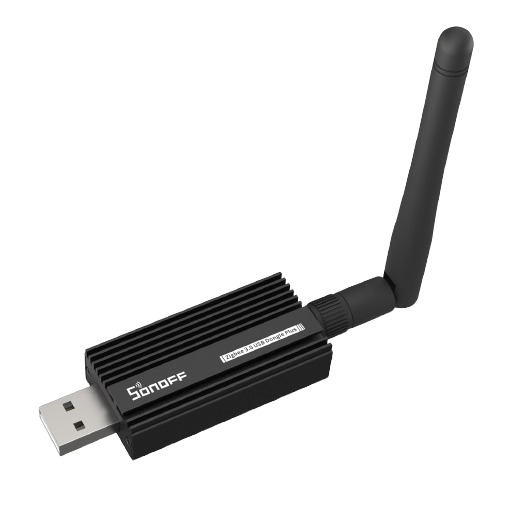
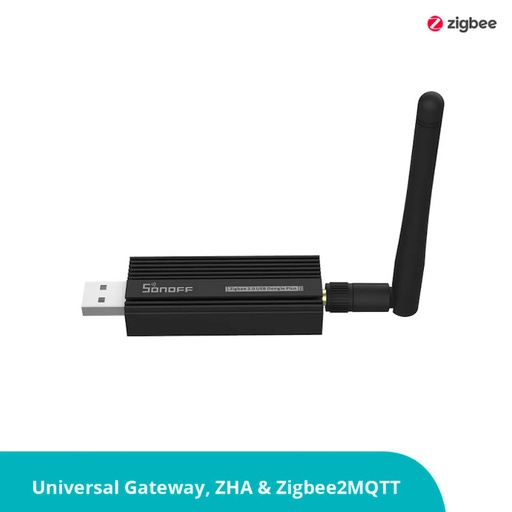
The affordable dongle we tested with Gladys, based on a Silicon Labs EFR32MG21 (EmberZNet) chip, with an external antenna. Tip: update its EmberZNet firmware for the best stability.
The Texas Instruments CC2652P version, trusted for years in the Zigbee2MQTT community. Rock-solid, well-documented and budget-friendly.
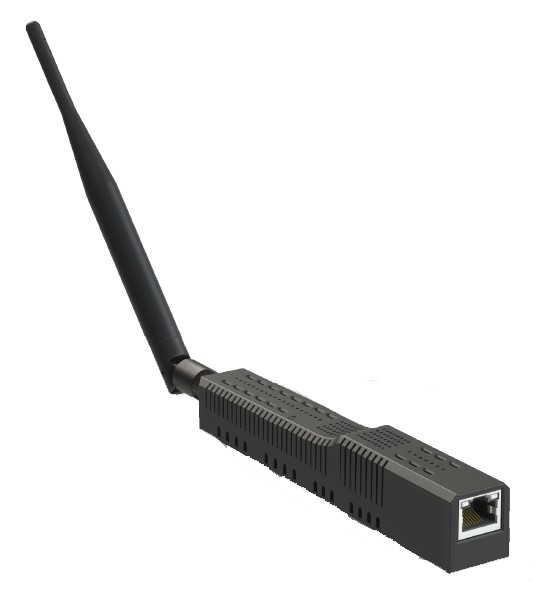
A coordinator with USB-C, Ethernet and PoE, so you can either plug it into your server or place it centrally in your home. Since Gladys 5, you can also use it as a network coordinator over Ethernet, placed away from your server and from interference.
A premium, widely-supported USB coordinator with strong range and a long track record. A great choice if you want a polished, well-supported stick.
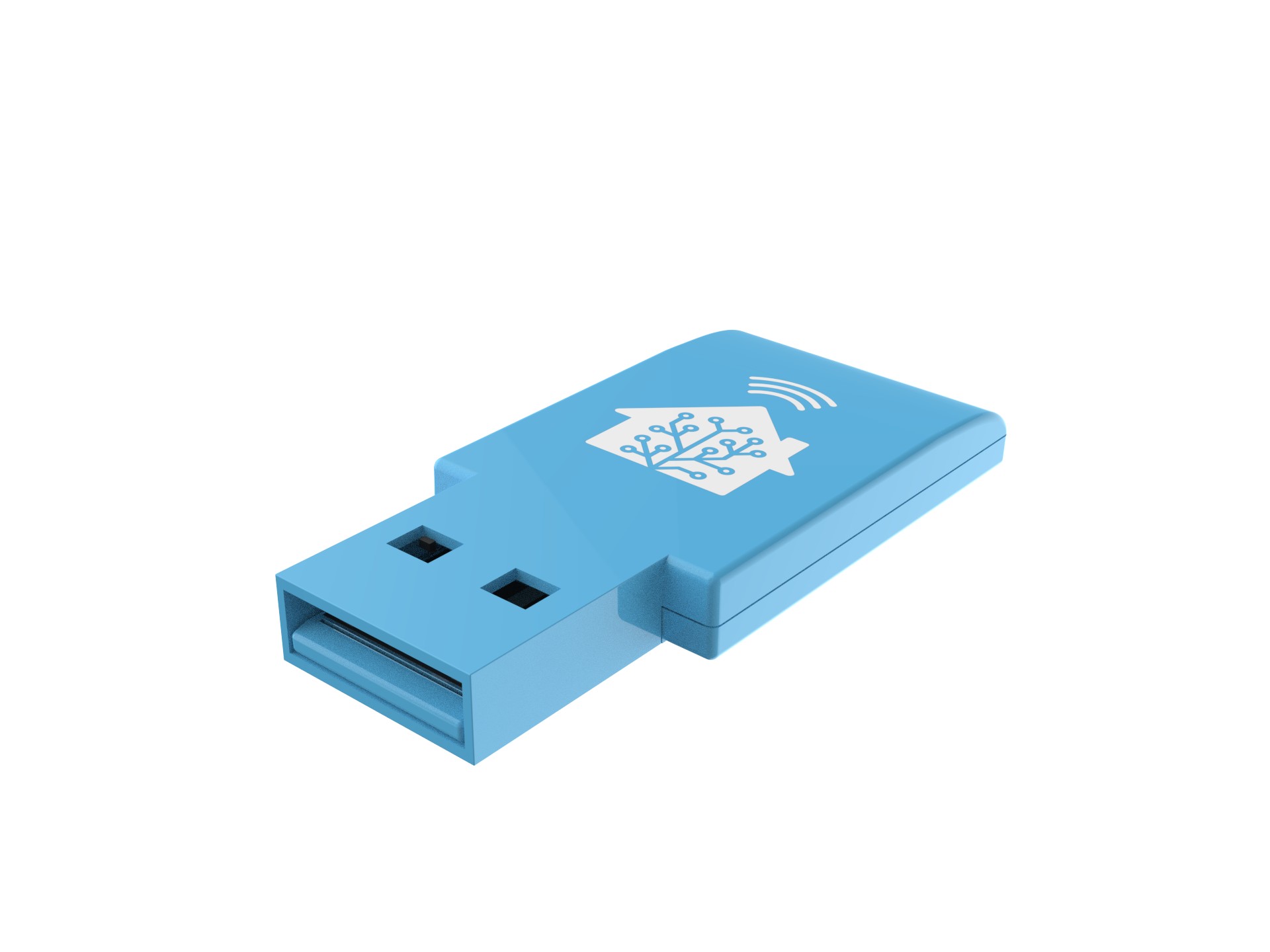
Nabu Casa's Silicon Labs-based coordinator (formerly SkyConnect). It works great with Zigbee2MQTT and is a supported coordinator type in Gladys.
The full, always up-to-date list of compatible coordinators is on the Zigbee2MQTT supported adapters page.
What about Matter and Thread dongles?
A growing family of coordinators carries two radios: one for Zigbee, one for Thread. The SMLIGHT SLZB-MR1 is the best known, with a Zigbee radio and a Thread radio side by side, plus USB-C, Ethernet and PoE. On paper it runs your Zigbee network and acts as a Thread border router at the same time.
Two things are worth knowing before you buy one for that reason. First, running both radios at once is still experimental territory, whatever the software you use. Second, and more importantly, a Thread radio will not get you Matter over Thread in Gladys today: a border router only carries the traffic, while the first pairing of a Matter over Thread device goes over Bluetooth, which Gladys does not handle yet. That step still needs a full Matter controller such as an Apple TV, a Matter compatible Echo or a Google Nest device, which then shares the device with Gladys.
None of that applies to Matter over Wi-Fi and Ethernet, which needs no dongle at all: those devices are already on your network and pair with Gladys directly.
So buy a multiprotocol coordinator if you want one box for both networks and you enjoy tinkering. Buy a plain, proven Zigbee coordinator if what you want is a Zigbee network that just works.
How it works with Gladys Assistant
With Gladys, you don't need a proprietary Zigbee hub. Plug your dongle into your Raspberry Pi, NAS or mini-PC, open the Zigbee2MQTT integration, and select your coordinator model from the list.
Gladys then automatically installs and configures the MQTT and Zigbee2MQTT containers for you, no manual setup, no third-party bridge. From there you pair your Zigbee devices and control them entirely locally, mixing brands freely.
Go further
Setting up your local Zigbee network is part of a bigger picture:
Let Gladys install and manage Zigbee2MQTT and its MQTT broker for you.
The step-by-step guide to setting up your dongle with Zigbee2MQTT.
Use your IKEA Tradfri and Dirigera devices locally, over Zigbee2MQTT or Matter.
Build a local weather station from Zigbee and Matter sensors Gladys reads directly.
Which wireless standard to choose for your smart home devices.
Why local-first matters and how to build a home that runs without the cloud.
Run your smart home on free, self-hosted software you can trust and keep.
Frequently asked questions
Which Zigbee dongle works best with Gladys and Zigbee2MQTT?
Any modern Zigbee 3.0 coordinator based on a Texas Instruments (CC2652) or Silicon Labs (EFR32 / EmberZNet) chip works well. Popular choices are the Sonoff Zigbee 3.0 USB Dongle Plus (ZBDongle-E and ZBDongle-P), the SMLIGHT SLZB-06, the ConBee II and the Home Assistant Connect ZBT-1. Gladys lets you select your exact model in the Zigbee2MQTT integration.
What is the best Zigbee dongle for a Raspberry Pi?
The Sonoff Zigbee 3.0 USB Dongle Plus is an excellent, affordable choice for a Raspberry Pi and is the one we tested with Gladys. Whatever you pick, always connect it with a short USB extension cable to keep it away from the Pi and its USB 3.0 ports, which cause 2.4 GHz interference.
What's the difference between the Sonoff ZBDongle-E and ZBDongle-P?
The ZBDongle-P uses a Texas Instruments CC2652P chip and has been the long-trusted choice in the Zigbee2MQTT community. The ZBDongle-E uses a Silicon Labs EFR32MG21 (EmberZNet) chip and is newer, with hardware that can also target Matter and Thread ecosystems. Both work well with Zigbee2MQTT and Gladys.
Do I really need a USB extension cable?
Yes, it's strongly recommended. Plugging the dongle directly into a Raspberry Pi or near SSDs and USB 3.0 ports is the most common cause of dropped Zigbee devices and poor range. A short (around 1 m) USB extension cable that moves the dongle away from those sources is the single most effective fix.
Can I use a Zigbee coordinator over Ethernet instead of USB?
Yes. Network coordinators such as the SMLIGHT SLZB-06 connect over Ethernet or PoE instead of USB. This lets you place the coordinator centrally in your home, away from interference, which often improves range and reliability more than changing the dongle model.
Is the SMLIGHT SLZB-MR1 a good choice?
The SLZB-MR1 is a dual-radio coordinator: one Zigbee radio and one Thread radio, with USB-C, Ethernet and PoE. It works as a Zigbee coordinator with Zigbee2MQTT and its type is selectable in Gladys, connected over USB. Running Zigbee and Thread simultaneously is still experimental, and its Thread radio will not let Gladys pair Matter over Thread devices on its own: that first pairing goes over Bluetooth, through a full Matter controller such as an Apple TV, a Matter compatible Echo or a Google Nest device. Buy it for the Zigbee side and the flexibility, not as a way into Matter.
Do I need a Matter or Thread dongle for Gladys?
No, and a Thread dongle would not help anyway. Matter devices on Wi-Fi or Ethernet are already on your network and pair with Gladys directly, with no dongle at all. Thread devices do need a Thread border router, but a bare border router is not enough with Gladys today: the initial pairing of a Matter over Thread device goes over Bluetooth, which Gladys does not handle yet, so it has to be done on a full Matter controller such as an Apple TV, a Matter compatible Echo or a Google Nest device, and the device is then shared with Gladys. A Zigbee dongle is for Zigbee devices, which are a separate, still very large ecosystem.
Do I need a Zigbee hub or bridge with Gladys?
No. A USB Zigbee dongle plus Zigbee2MQTT replaces any proprietary hub. Gladys installs and configures Zigbee2MQTT for you, so your Zigbee devices are controlled directly and entirely locally, with no manufacturer bridge or cloud account.
Build your local Zigbee network
Gladys is free, open-source, and installs in a single Docker command. Plug in a dongle and control your Zigbee devices locally, no hub required.